





Sound of silence
What does a sleep therapist do – and when is it helpful?
Many people sleep poorly, don't feel rested in the morning, or regularly experience back, shoulder, or neck pain. Often, this is dismissed as "normal." This is exactly where a sleep therapist comes in.
What is a sleep therapist?
A sleep therapist is a specially trained expert who helps people with sleep problems. This doesn't just involve difficulties falling or staying asleep, but the entire sleep process: posture, sleep environment, habits, and daily stressors.
Unlike a traditional doctor, the focus is not immediately on medication, but on understanding the causes.
What problems can a sleep therapist help with?
A sleep therapist can be helpful for:
-
Difficulty falling and staying asleep
-
Frequent nighttime awakenings
-
Back, shoulder, or hip pain in the morning
-
Restless sleep and frequent tossing and turning
-
Exhaustion despite sufficient sleep duration
-
The feeling of "never truly sleeping deeply"
Many of these problems are directly related to the sleeping surface – meaning the mattress, topper, and pillow.
How does a sleep therapist work?
A sleep therapist takes a holistic view of sleep. This includes, for example:
-
Sleep position (back, side, or stomach sleeper)
-
Pressure points on shoulders, hips, and back
-
Condition of the mattress (too hard, too soft, saggy)
-
Sleep climate (heat, sweating, restlessness)
-
Daily routines and sleep habits
It often turns out that:
👉 The body cannot properly relax at night because the sleeping surface does not provide optimal support.
Do you always need to see a sleep therapist immediately?
Not necessarily. In many cases, sleep problems can be significantly improved if:
-
the mattress is balanced
-
pressure points are reduced
-
the spine is better supported at night
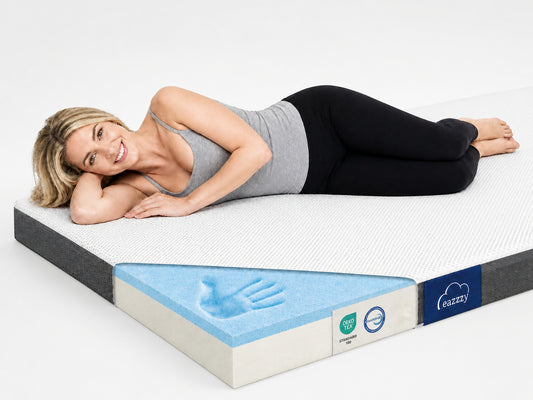
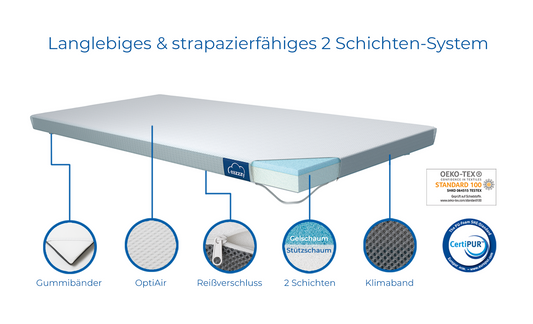
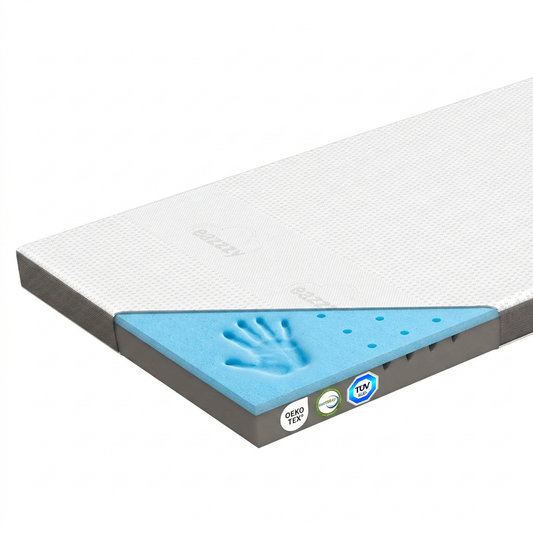
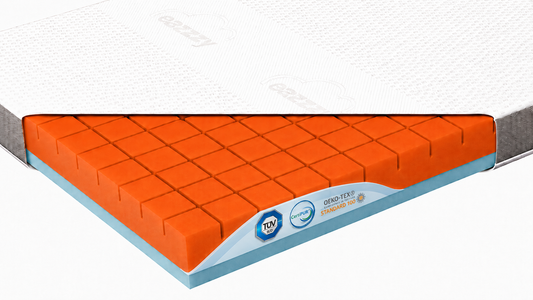
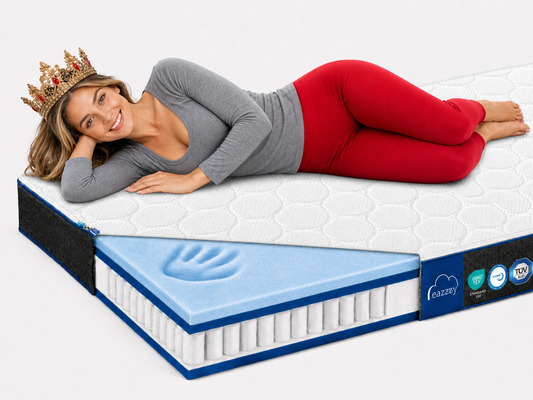
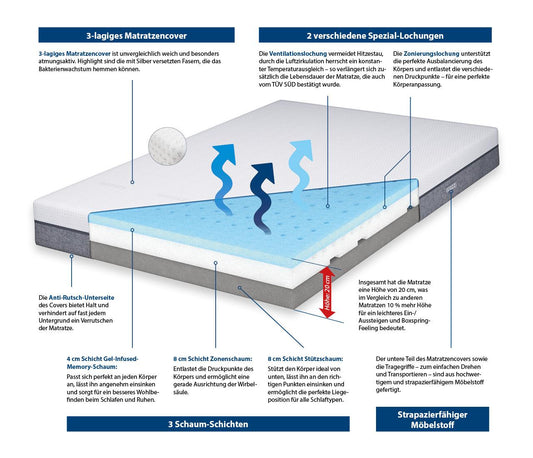
A high-quality, temperature-regulating topper can make a big difference here – especially if the mattress is still good but no longer feels right.
Sleep quality starts with the right support
Sleep therapists repeatedly confirm:
Good sleep is not a luxury, but a foundation for health.
Those who lie correctly at night sleep:
-
more peacefully
-
more deeply
-
more relaxed
-
and wake up more rested
Even small changes can have a big impact.
Conclusion
A sleep therapist can help identify the causes of poor sleep. At the same time, it's worth checking the sleep foundation first: mattress, topper, and sleep comfort.
Because often the solution is closer than you think – right in your own bed.
Tags: